
How to Clean a Reglazed Tub in Santa Clara
A cured reglaze cleans like a brand-new tub — mild liquid cleaner, soft sponge, no grit. Here's the full care routine that takes a Santa Clara finish to the far end of its 10–15 year life.
How do you clean a reglazed tub?
Mild cleaner, soft sponge, rinse, wipe dry
Clean a reglazed tub with a mild liquid bathroom cleaner on a soft sponge or cloth, rinse, and wipe it dry. Treat the cured acrylic-urethane finish exactly like a brand-new tub. Got a question about your finish? Call (669) 337-6184, Monday–Saturday 8 AM–6 PM, or book a Santa Clara reglazing quote online.
What to keep off it
No abrasive powders or pastes, no scouring or steel-wool pads, no bleach left to pool, no drain openers, and no acetone or strippers. Grit dulls the gloss and harsh chemistry attacks the coating. Skip suction-cup mats too — they trap water and can lift the edge.
The Santa Clara hard-water habit
Around here it's mineral spotting, not dirt, that builds up. Wiping the tub dry after each use does more for the finish than any strong cleaner, and a little diluted vinegar lifts hard-water spots without abrasives.
Reglazed-tub care facts
- A cured acrylic-urethane finish lasts 10–15 years when cleaned without abrasives; abrasive cleaning is the most common reason a good finish dulls early.
- The cure window is 24–48 hours — keep the tub dry and out of service for the full time on your care sheet.
- Santa Clara tap water is hard, so mineral spotting, not dirt, is what builds up on the finish.
- Diluted white vinegar safely removes hard-water spots; never use scouring powder to chase them.
- Suction-cup bath mats are a leading cause of edge-lift because they hold water against the floor of the tub.
- We leave written care instructions on every Santa Clara job, and our warranty-callback rate stays under 1.7%.
- Every reglaze carries a 5-year written warranty against peeling and adhesion failure under normal care.
The everyday cleaning routine for a reglazed tub
The care sheet Daniel leaves on every Santa Clara job fits on one card, because looking after a reglazed tub really is that simple. Once the acrylic-urethane has cured it behaves like the surface on a factory-fresh fixture, so the whole routine is: mild liquid bathroom cleaner, a soft sponge or microfiber cloth, warm water, then rinse and wipe dry. That handles soap scum and body oil in a few seconds. The only thing that makes the job here different from anywhere else is the water. This stretch of Silicon Valley runs hard, and what collects on a tub between cleanings isn't grime so much as mineral spotting — the chalky film you see on a glass shower door is the same thing settling on the tub floor. Drying the surface after a bath or shower keeps that film from ever forming, which is why the single most useful habit in Santa Clara has nothing to do with a cleaning product at all.
When spotting does build up, the fix is gentle, not aggressive. A soft cloth with a little white vinegar diluted in warm water, left to sit for a minute, lifts mineral deposits because a mild acid dissolves them — where a scouring powder would only grind the gloss trying to scrape them off. That's the whole trick people miss: hard-water marks come off with chemistry, not muscle. After the vinegar, rinse with clean water and wipe dry, and the finish comes back to its original shine. Do that once a week and you'll rarely need anything stronger.
The mistake Daniel sees most often on previously-coated tubs is people reaching for the same products they used on the old porcelain — the can of cleansing powder under the sink, the green abrasive pad, the bleach soak for a stained ring. Those habits made a kind of sense on bare enamel that was already worn. On a fresh reglaze they quietly take years off the finish, one cleaning at a time, and the loss is permanent. Swap them out and the new surface lasts the way it's meant to.
What's safe, and what to keep off the finish
Daniel's one-line rule covers nearly every product: if it pours and foams gently, it's fine; if it's a powder, a paste, or smells like a solvent, keep it off the tub. Here's how that shakes out in practice.
| Safe to use | Keep off the finish |
|---|---|
| Mild liquid dish soap | Cleansing powders & abrasive pastes |
| Non-abrasive pH-balanced tub spray | Scouring pads & steel wool |
| Diluted white vinegar (hard-water spots) | Bleach left to pool or soak |
| Soft sponge or microfiber cloth | Drain openers / caustic chemicals |
| Warm water rinse, then wipe dry | Acetone, paint thinner, strippers |
| A rubber mat you lift and dry between uses | Suction-cup mats left stuck down |
The suction-mat point catches people off guard, so it's worth spelling out. A mat with suction cups holds a thin film of water trapped against the tub floor for hours at a time. On a long enough timeline that standing moisture can work its way under the edge of the finish and lift it — the same mechanism that walks a coating off when the original prep was weak. If you want a non-slip surface, use a mat you pick up and dry after each use rather than one that lives stuck to the bottom. For more on why edges lift and how a failed finish gets fixed, see how long reglazing lasts.
The first 48 hours: cure time comes first
Wait the full 24–48 hours on your care sheet before running water, stepping in, or putting anything in the tub. The acrylic-urethane needs that window to cure hard. Use it early on a soft finish and you can press a permanent mark into it that no cleaning will remove.
Everything about cleaning a reglazed tub assumes one thing happened first: you let it cure. The coating goes on as a liquid and hardens over the day or two after we leave, and during that window it's vulnerable in a way it never will be again. Run a shower over a green finish and the water can soften it and leave a cloudy patch; set a shampoo bottle down and it can print the ring of the base into the surface. Both are permanent. So the first rule of care isn't a cleaner at all — it's patience. Leave the tub dry, keep pets and kids out of it, don't drape a wet towel over the rim, and wait out the time we wrote on the sheet. After that the finish is fully hardened and the simple weekly routine takes over. If you ever see a chip or a worn spot down the road, treat it the day you notice it; a quick chip and crack repair seals water out before it can creep under the finish and start a lift.
Hard water in Santa Clara: spotting, not staining
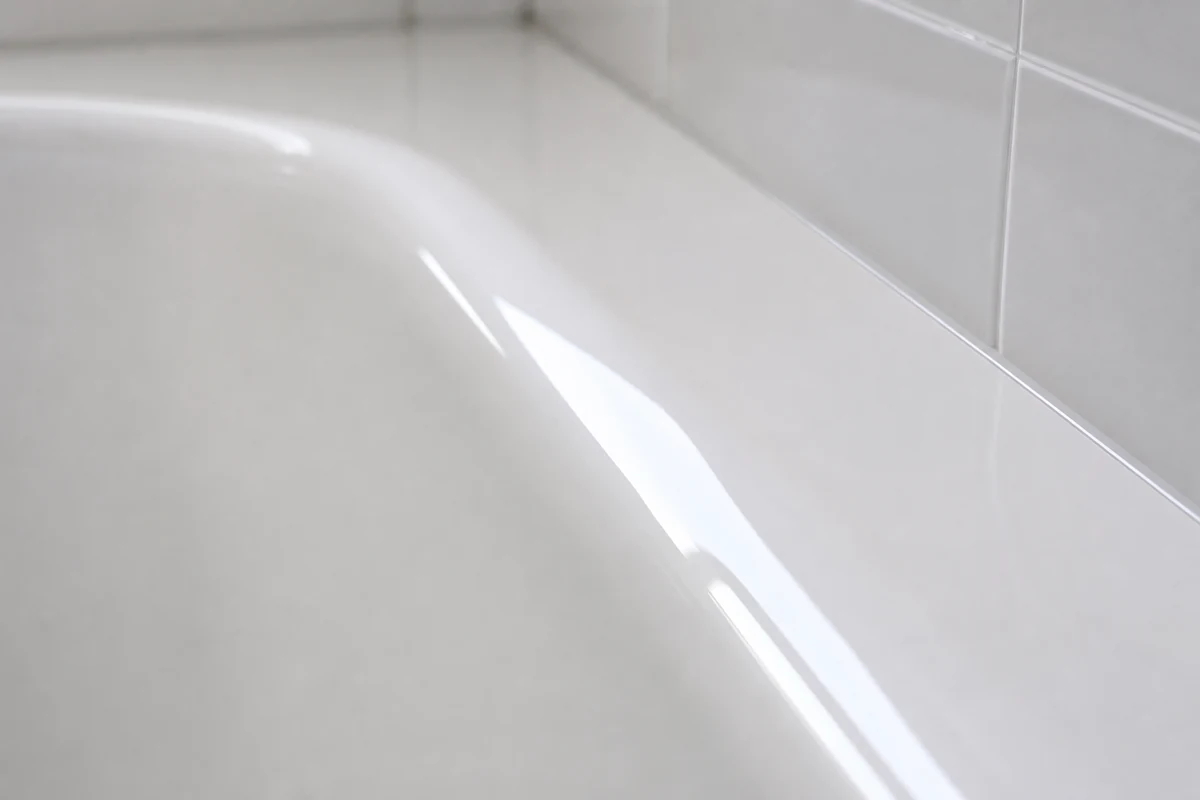
Most of Santa Clara's tap water is on the hard side, and that shapes how a reglazed tub ages here more than anything else. The white haze that creeps onto a tub floor in Rivermark or near Lawrence Station condos, the spots that dry on the rim in an Old Quad bathroom — that's dissolved calcium and magnesium left behind when water evaporates, not dirt sitting on the surface. It matters because the instinct to scrub harder is exactly wrong. You can't scrape minerals off without taking gloss with them; you dissolve them. A weekly wipe with diluted white vinegar handles light buildup, and for the rim and corners a vinegar-dampened cloth laid over the spot for a few minutes loosens it before a final rinse. The real prevention, though, is drying the tub after each use, so the water never stays long enough to leave a mark. Homes on a softener see far less of this, but even without one, the dry-after-use habit keeps a Santa Clara finish looking new. The same hard water is why we steer customers away from leaving metal cans or wet sponges sitting in the tub — both hold moisture and minerals against the finish and leave a ring.
Care that keeps the warranty intact
- A 5-year written warranty against peeling and adhesion failure under normal care.
- Written care instructions left with every Santa Clara job.
- Fully licensed and insured, with liability and workers' coverage.
- Guidance on the right cleaners so nothing avoidable shortens the finish.
- Spot chip repairs available before a small problem becomes a peel.
- A finish built to reach 10–15 years with this simple routine.
Cleaning a reglazed tub FAQ
How do you clean a reglazed bathtub?
Use a mild liquid bathroom cleaner on a soft sponge or cloth, then rinse and wipe dry. Treat the finish like a brand-new tub. In Santa Clara, drying the tub after each use to stop hard-water spotting matters more than any strong cleaner.
What cleaners are safe for a reglazed tub?
Mild liquid soaps and non-abrasive bathroom sprays — dish soap, gentle pH-balanced tub cleaners, or diluted vinegar for hard-water spots — are all safe on a cured acrylic-urethane finish. The rule is simple: if it pours and foams gently it's fine, and if it's a powder, paste or strong solvent, keep it off.
What should you never use on a reglazed tub?
Never use abrasive powders or pastes, scouring or steel-wool pads, bleach left to pool, drain openers, or acetone and paint strippers. Grit grinds the gloss off and harsh chemistry attacks the coating. Suction-cup mats are also out, because they trap water against the surface and can lift the finish.
How long after reglazing can you use the tub?
Wait the full 24–48 hours on your care sheet before running water or stepping in. The coating needs that window to cure hard. Use it early on a soft finish and you can print a permanent mark, so leave the tub dry and out of service until the time is up.
How do I remove hard-water stains from a reglazed tub in Santa Clara?
Wipe the area with a soft cloth and a little white vinegar diluted in warm water, let it sit briefly, then rinse and dry. Santa Clara's hard water leaves mineral spotting, not stuck-on dirt, so a gentle acid like vinegar lifts it without abrasives. Drying the tub after each use stops it from building up.
Questions about caring for your Santa Clara finish?
Open Mon–Sat 8 AM–6 PM. Call us about cleaning, a chip, or a fresh reglaze and we'll quote your fixture from a couple of photos — usually the same day.