
Bathtub Reglazing Projects in Santa Clara, CA
Detailed before-and-after case studies, neighborhood by neighborhood — what we walked into, the prep and repair it took, how many coats, the turnaround, and what a job like it costs in Santa Clara.
Direct answer
What do Santa Clara bathtub reglazing projects actually look like?
Most Santa Clara reglazing projects fall into two patterns: an original cast-iron or porcelain-on-steel tub in the postwar core (Old Quad, Bowers, Pruneridge) that needs rust treatment, chip repair, a full acid etch and several acrylic-urethane coats, finishing in 3–5 hours for $799–$890; or a gelcoat fiberglass tub or shower in a 1980s–2000s condo (Rivermark, Lawrence Station, Santa Clara Square) that is scuff-sanded, primed and recoated for $729–$890. To get yours quoted, book a free Santa Clara reglazing quote online or call (669) 337-6184, Mon–Sat 8 AM–6 PM.
Are these your real projects?
Each case study below is a representative example of the work we do in that neighborhood, paired with a real before-and-after photo. We have not invented customer names, quotes or dates — just honest, typical jobs from the roughly 1,860 fixtures we have refinished across Santa Clara since 2013.
Citable Santa Clara project facts
- Roughly 1,860 fixtures refinished across Santa Clara since 2013, averaging about 143 a year — around 1,004 bathtubs, 298 showers, 223 sinks, 205 countertops and 130 tile surrounds.
- A standard bathtub project is on site 3–5 hours and usable in 24–48 hours after the final coat cures.
- Cast-iron and porcelain-on-steel tubs make up close to half the tubs we spray; gelcoat fiberglass and acrylic make up most of the rest.
- Typical project cost ranges: bathtub $729–$890, shower $920–$1,040, sink $419–$495, countertop $519–$640, tile from $520.
- Warranty-callback rate across those jobs has stayed under 1.7%, and every reglaze carries a 5-year written warranty.
- For pre-1978 Old Quad and Bowers homes, projects follow EPA RRP lead-safe practices during repair and sanding.
- See a fuller drag-to-compare image set in the before & after gallery, or book your own project online.
Real Santa Clara work, written up honestly
The before & after gallery shows you the photos. This page is the other half of the story — the part a homeowner actually wants before they hand over a fixture: what we found when we walked in, what the prep and repair really involved, how many coats went on, how long it took, and what a job like it costs here. I have written each one as a representative example, because no two Santa Clara bathrooms are identical, but the patterns repeat by neighborhood and by the era a building went up. A 1950s cast-iron tub in the Old Quad behaves one way; a molded gelcoat shower in a Rivermark condo behaves another. After more than a decade and close to 1,860 fixtures across this city, I can tell you what your fixture is likely to need before I even see it — and these write-ups show that thinking.
I want to be plain about one thing: I have not put fake names, made-up quotes or invented dates on this page. Where you see a neighborhood and a tub type, read it as “a typical job like this in that area runs as follows.” The photos are real fixtures we refinished; the numbers are the real ranges those jobs land in. If you want a firm price on your own fixture, send a couple of photos and I will give you an exact number.
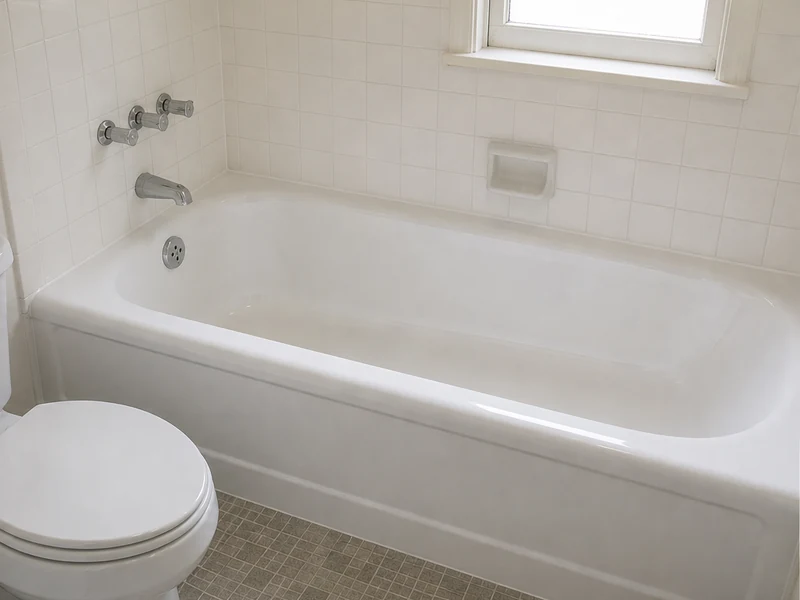
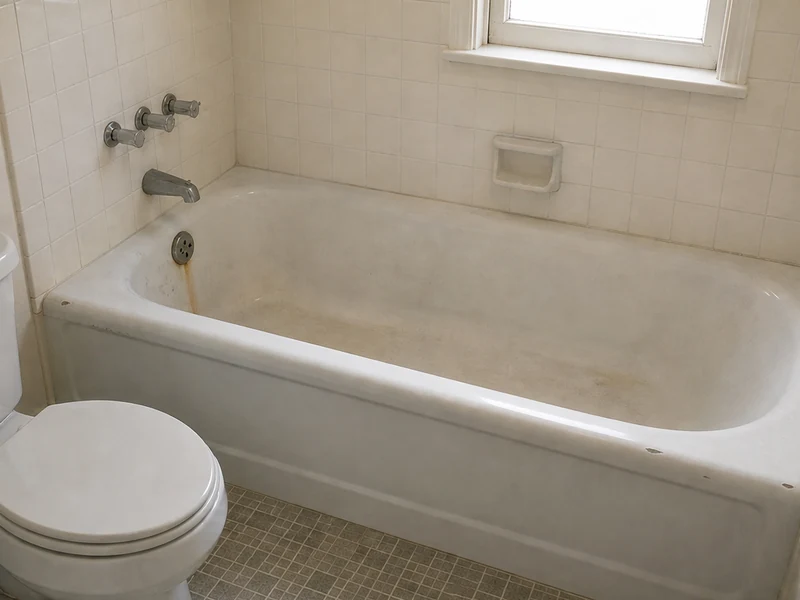
1950s cast-iron alcove tub — Old Quad
 Before
After
Before
After
What we found: The Old Quad near Santa Clara University is full of homes built in the 1940s and 50s, and most still have the original porcelain-over-cast-iron tub. A representative one looks like this: decades of use have chalked the enamel dull, there is orange rust feathering out around the drain and overflow where the glaze wore through, and the rim carries a couple of chips from a dropped shampoo bottle. The body of the tub is perfect — cast iron does not rot — only the surface has failed.
What we did: Because the home predates 1978, we work lead-safe under EPA RRP rules. We mask and ventilate, deep-clean off forty years of body oil and cleaning film, treat and neutralize the rust down to sound metal, then build the pitted areas back and fill the rim chips and sand them dead level. Cast-iron enamel is hard and glassy, so it gets a full acid etch to give the primer something to grab. Then a bonding primer and three to four thin coats of acrylic-urethane go on with an HVLP gun, followed by fresh silicone re-caulk.
Outcome & turnaround: A factory-smooth white gloss, hard and even, usable 24–48 hours later. On site about 4–5 hours. Cost range: $850–$890 — the high end of our tub band, because rust and chip repair drive the hours, not the spray.
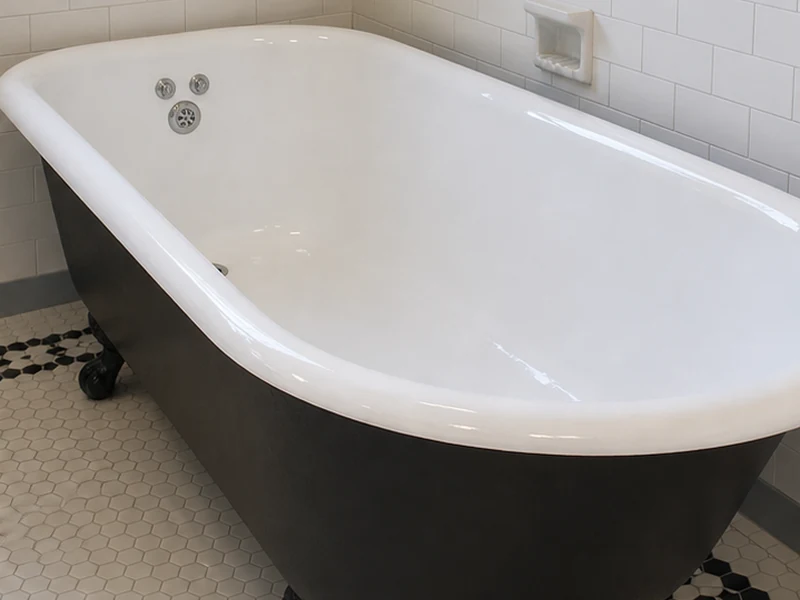
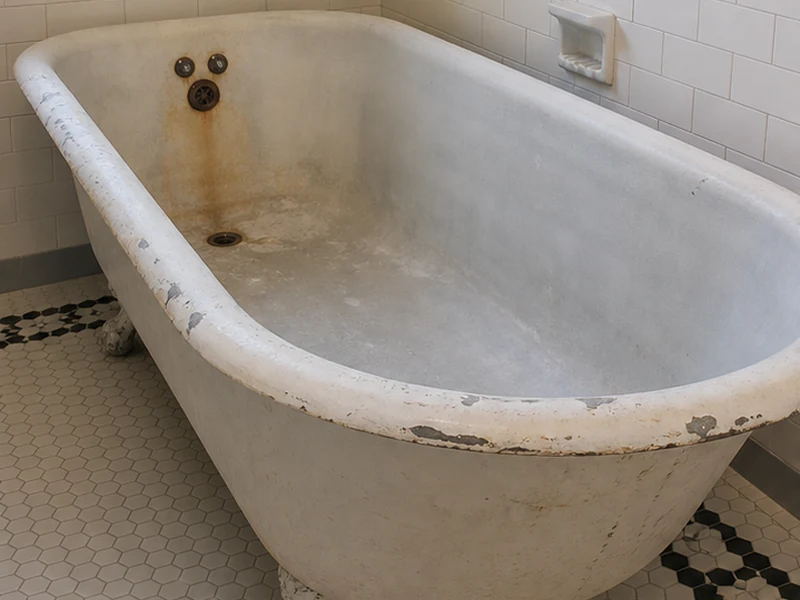
Antique clawfoot tub — near Santa Clara Mission
 Before
After
Before
After
What we found: The older streets around the Santa Clara Mission and the historic core hold the occasional roll-rim clawfoot or pedestal tub worth real money to the right buyer. A representative one has a stained, crazed interior, a dull and sometimes painted-over exterior, and the original cast-iron body in perfect structural shape. Owners almost always want to keep it — these antiques cannot be replaced like-for-like at any reasonable price.
What we did: Clawfoots are heavier and more awkward than alcove tubs, so containment and masking take longer, and we treat both the interior and the visible exterior. Inside: deep clean, chip and crazing repair, full acid etch, bonding primer and several acrylic-urethane coats to a hard white. The exterior gets cleaned and recoated in the owner’s chosen color — many keep white, some go with a contrasting tone on the outside. We work around the existing plumbing rather than disconnecting it.
Outcome & turnaround: A restored antique that reads as new while keeping its original shape and feet. On site 5–6 hours given the two-surface work. Cost range: $900–$1,150 depending on exterior treatment. See more on our clawfoot & antique tub page.
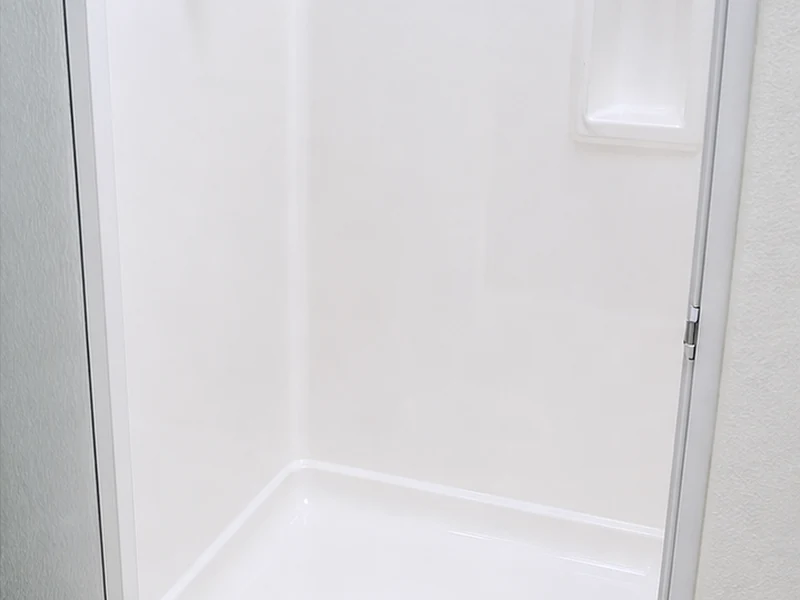
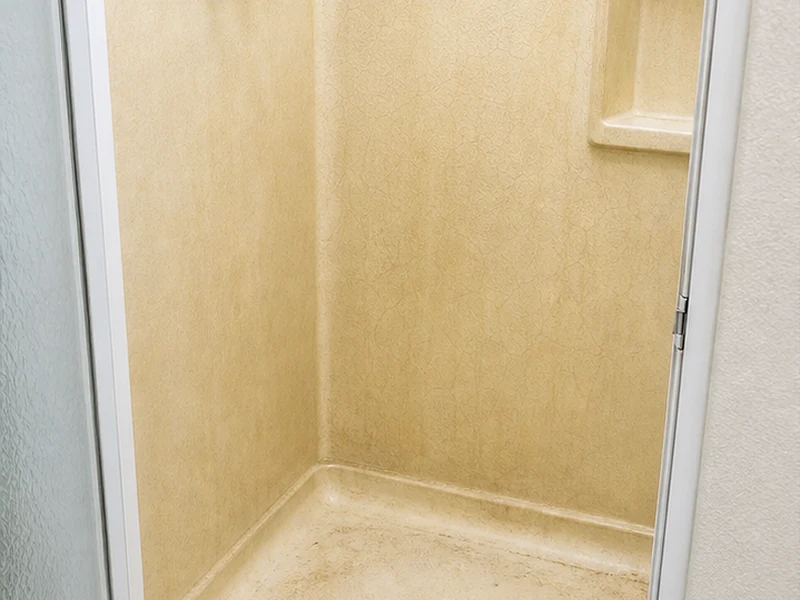
Gelcoat fiberglass shower stall — Lawrence Station condo
 Before
After
Before
After
What we found: The condos and rentals near the Lawrence Caltrain stop went up in the 1980s and 90s with molded gelcoat fiberglass tub-and-shower units. A representative one has yellowed unevenly, picked up fine spiderweb crazing in the surface layer, and carries built-up soap scum that no longer scrubs off because the gloss underneath is gone. The pan itself is sound — no soft spots underfoot — so the fixture is a good refinishing candidate.
What we did: Gelcoat does not get acid-etched; it gets scuff-sanded and an adhesion promoter so the new coating bonds without crazing later. We deep-clean off the scum, scuff-sand the walls and pan, treat the crazing, apply a bonding primer, then several thin acrylic-urethane coats. On the floor we build a slip-resistant texture into the topcoat (from $75) rather than rely on a mat that traps water.
Outcome & turnaround: An even white stall with traction underfoot, usable in 24–48 hours. On site about 4–6 hours. Cost range: $920–$1,000. More on our shower refinishing page.
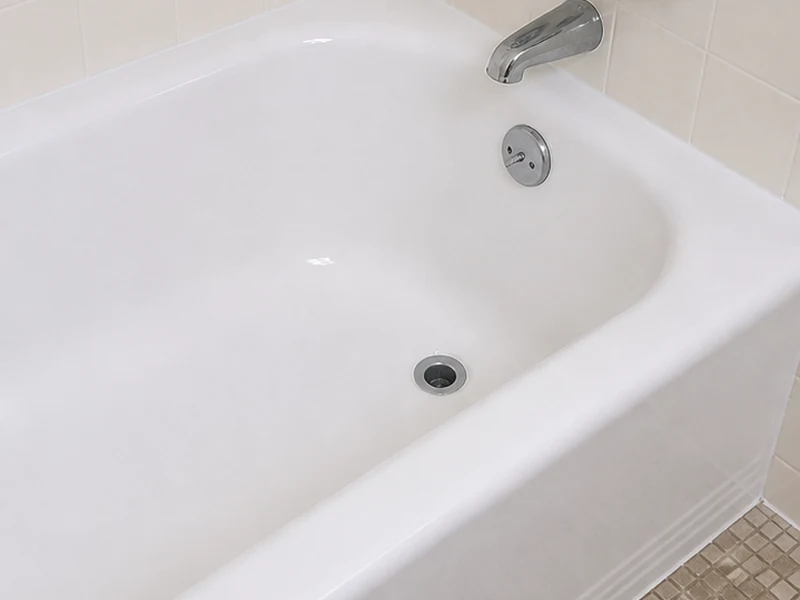
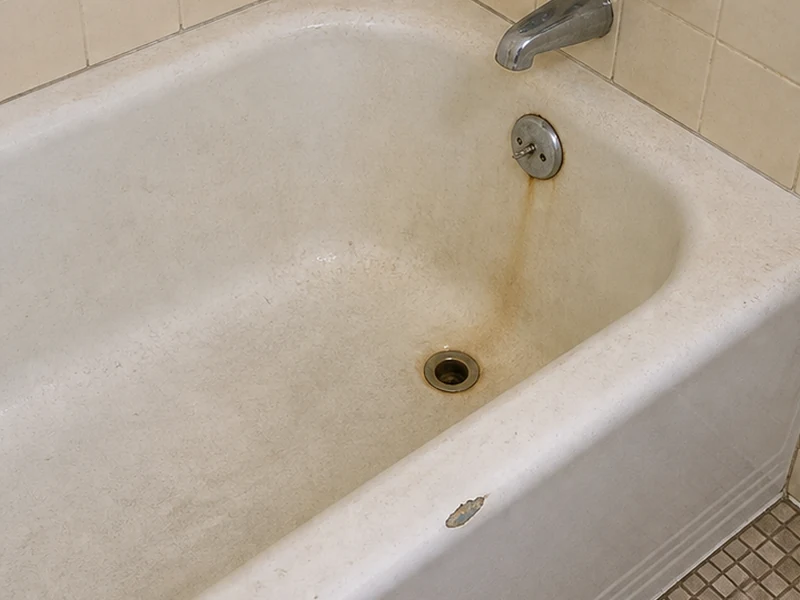
Porcelain-on-steel tub — Bowers bungalow
 Before
After
Before
After
What we found: The postwar bungalows around Bowers Park often run porcelain-over-steel rather than cast iron — a thinner, lighter shell that still takes a finish beautifully but needs a gentler hand. A representative one has dull, worn enamel, a few edge chips, and minor rust starting where the porcelain chipped through to the steel. The shell flexes slightly more than cast iron, so edge prep matters more here.
What we did: Deep clean, treat the small rust spots, fill and level the chips, then a full acid etch tuned for the thinner enamel. Careful edge and corner work keeps the coating from building up where the shell meets the surround. Bonding primer, then three thin acrylic-urethane coats and fresh re-caulk. The thinner shell means we watch coat thickness closely so the finish stays flexible with the steel.
Outcome & turnaround: A clean, even white that hides the old chips entirely. On site 3–4 hours. Cost range: $760–$810. More on our porcelain & cast-iron tub page.
Cultured-marble vanity top — Rivermark townhome
 Before
After
Before
After
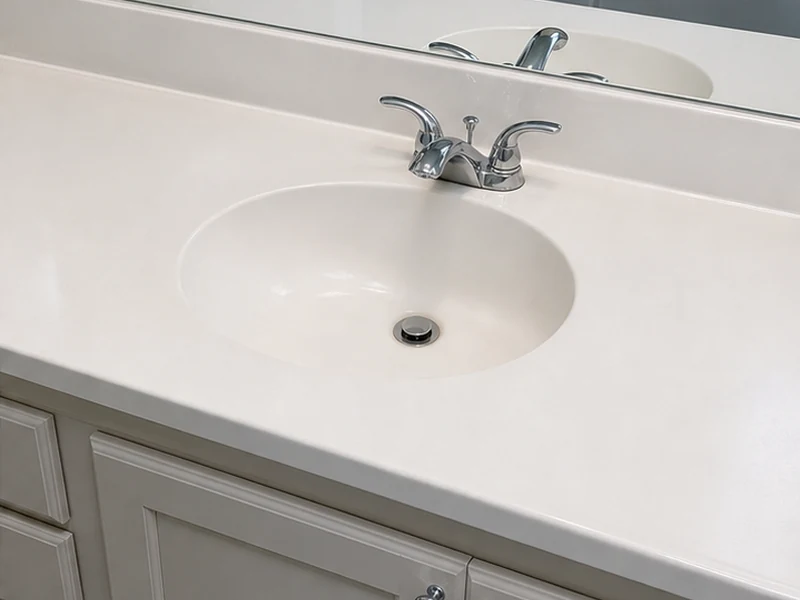
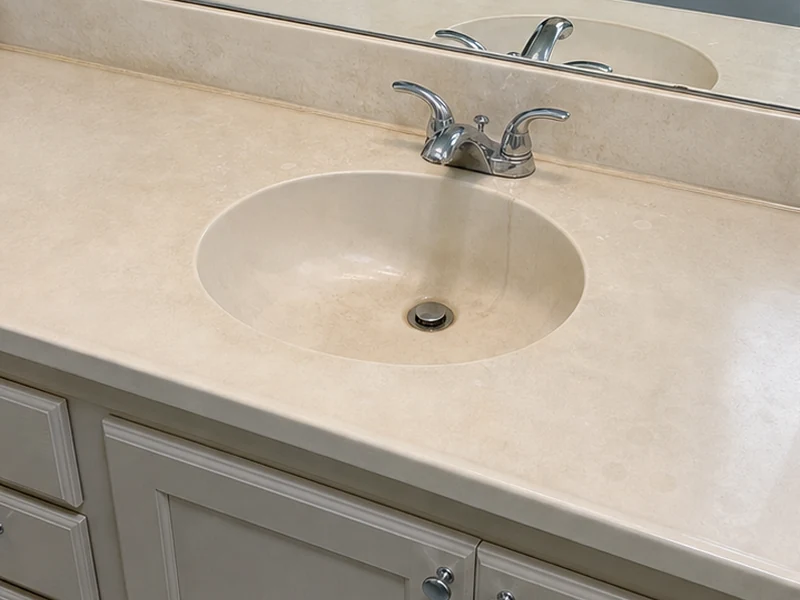
What we found: Rivermark’s master-planned townhomes and condos from the 2000s are full of cultured-marble vanity tops — that cast resin-and-marble-dust material with the integrated bowl. A representative one has yellowed overall, etched dull where toothpaste and perfume sat, and lost its clear gelcoat sheen around the faucet and drain. Owners often assume it has to be ripped out; it does not.
What we did: Clean and de-grease, scuff-sand the glossy surface, repair any chips at the bowl edge, then a bonding primer and acrylic-urethane topcoat. Cultured marble recolors well, so this owner moved off the dated veined 2000s look to a clean modern solid — a popular choice in these condos. Color is the same price as white; the topcoat is the topcoat regardless of tint.
Outcome & turnaround: A fresh, even vanity top with the yellowing gone for good, usable in 24–48 hours. On site 3–5 hours. Cost range: $519–$640. More on our cultured marble & vanity page.
Avocado tile tub surround — Forest Park home
 Before
After
Before
After
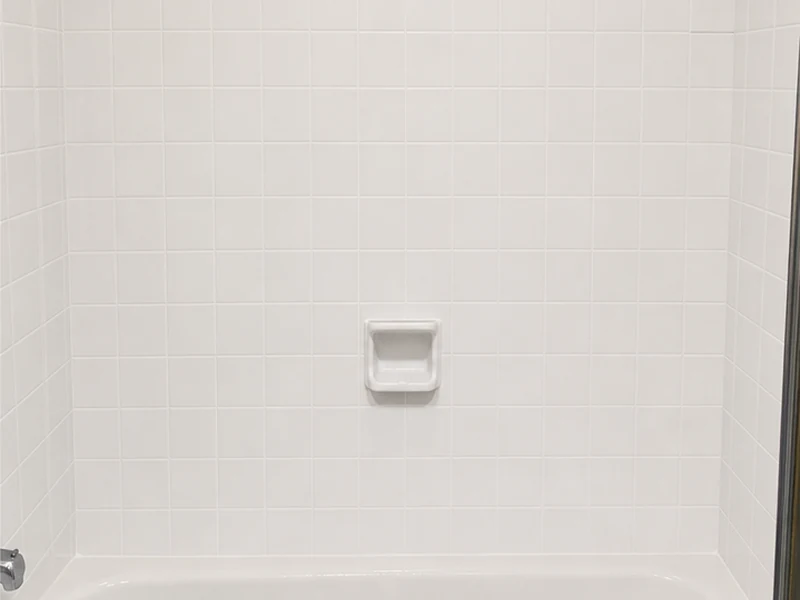
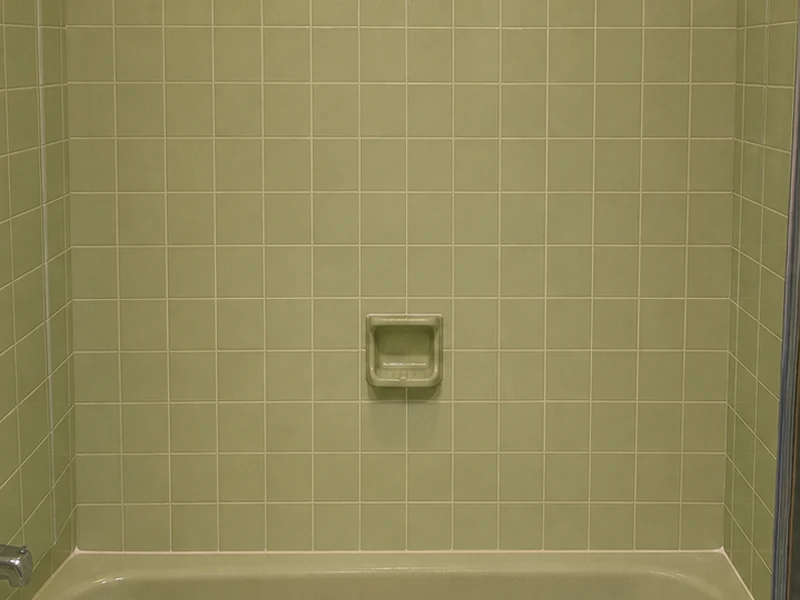
What we found: Forest Park’s single-family homes and older condos still hold plenty of 1970s tile surrounds in avocado green, harvest gold, pink and almond. A representative one has sound, well-adhered tile — nothing loose — but a color nobody has wanted for forty years and grout lines that have darkened and stained. The owner wanted the dated color gone without the cost and mess of a tile tear-out.
What we did: Reglazing tile is all in the prep. We clean off soap film, repair any cracked grout, then etch or scuff-sand the glazed tile and the grout so the coating bonds across both. A bonding primer goes on, then acrylic-urethane in the chosen white, which seals the tile and grout into one continuous, wipeable surface. No tile is removed and no wall is opened.
Outcome & turnaround: A bright white surround that reads as new tile, with the avocado gone in a day instead of a week-long remodel. On site 3–5 hours. Cost range: from $520. More on our tile reglazing page.
Vintage porcelain sink — Westwood Oaks home
 Before
After
Before
After
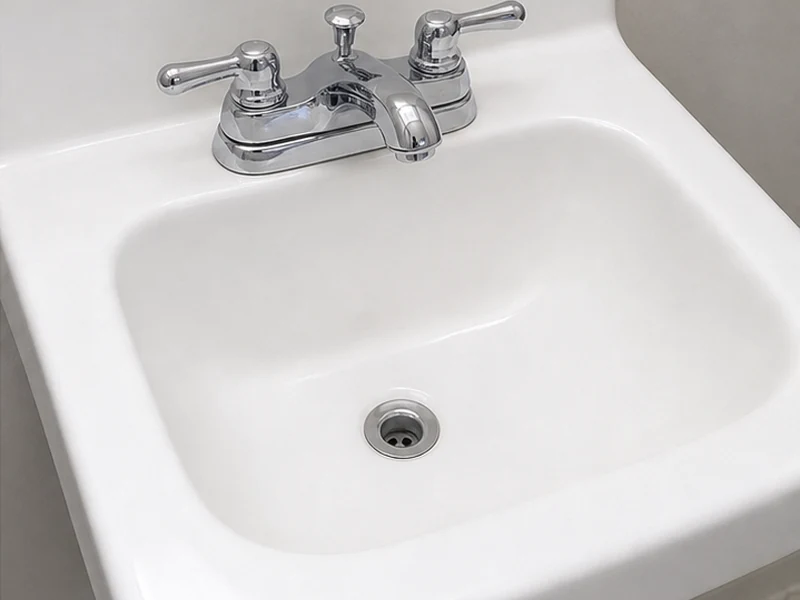
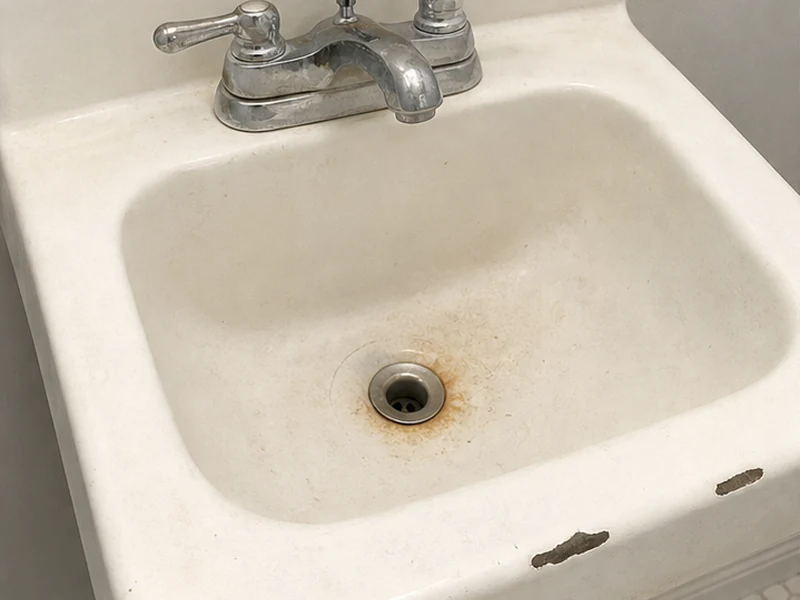
What we found: The quiet single-family blocks of Westwood Oaks hold original porcelain sinks worth keeping. A representative one has a chip on the front edge, rust staining at the drain where the glaze wore, and an overall dullness that bleach no longer touches. Often we are doing it alongside the tub in the same bathroom, so the owner wants the two to match.
What we did: Sinks are small but fiddly — tight curves and a fixed faucet to mask around. We clean, treat the drain rust, fill and level the edge chip, etch the porcelain, then prime and spray two to three thin acrylic-urethane coats. Done in the same visit as the tub, the white is matched so basin and tub read as one renewed set.
Outcome & turnaround: A clean, glossy basin with the chip and rust gone, usable in 24–48 hours. On site 2–3 hours on its own, less when bundled with the tub. Cost range: $419–$495 standalone, lower per fixture when combined. More on our sink reglazing page.
Chip & crack spot repair — Santa Clara Square apartment
 Before
After
Before
After
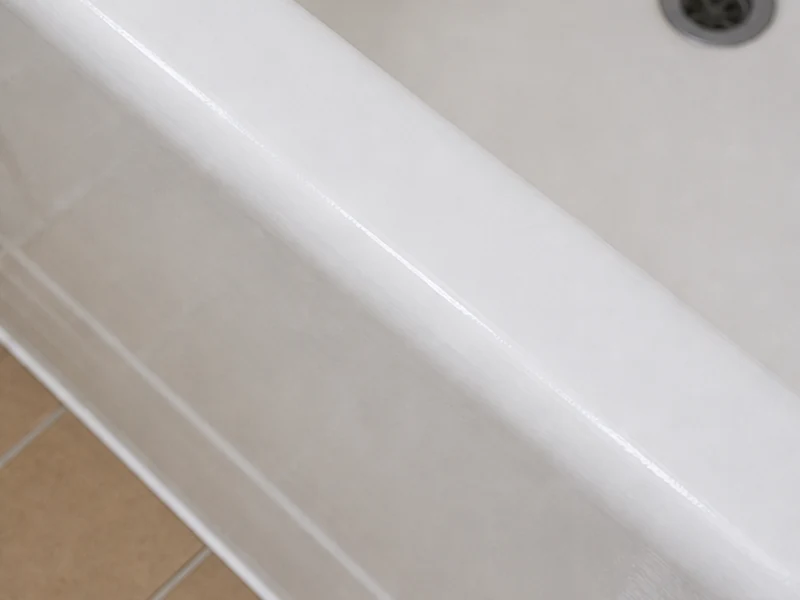
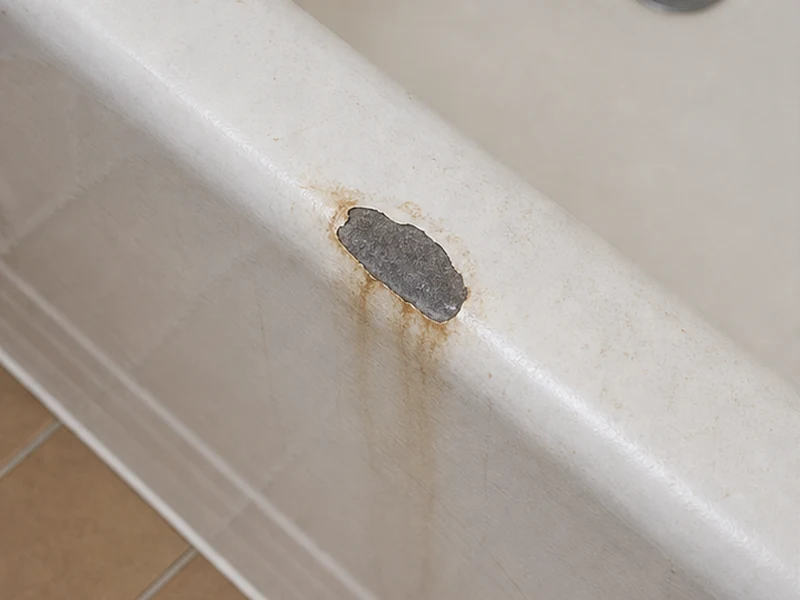
What we found: The newer mid-rise apartments and condos around Santa Clara Square run compact fiberglass tub-and-shower units, and the most common call here is not a full reglaze but a single point of damage: a deep chip from a dropped object, or a hairline crack at a stress point, exposing the substrate. For a turnover between tenants, the rest of the tub may be fine — only the damage needs fixing.
What we did: Spot repair is its own skill. We clean and key the damaged area, fill the chip or stabilize and fill the crack with a structural filler, sand it dead level, then color-match and blend the repair into the surrounding finish so it disappears rather than reading as a patch. On a fiberglass unit we feather the blend carefully because the gloss is unforgiving of a hard edge.
Outcome & turnaround: An invisible repair that gets the unit rent-ready fast. On site 1–2 hours. Cost: quoted per repair, well below a full reglaze. More on our chip & crack repair page.
What every Santa Clara project has in common
Across all eight of these — cast iron in the Old Quad, a clawfoot near the Mission, gelcoat in Lawrence Station, a vanity in Rivermark, tile in Forest Park — the spray is the easy part and the prep is the job. Every fixture is cleaned down to a sound surface, repaired where it is chipped, cracked or rusted, then etched (porcelain, cast iron, tile) or scuff-sanded (fiberglass, gelcoat, cultured marble) so the bonding primer actually grabs. Only then do the thin acrylic-urethane coats go on, and only after a 24–48 hour cure does anyone run water. Skip the etch or the repair to save twenty minutes and the finish crazes or peels inside a year — which is exactly why bargain and DIY-kit jobs fail. You can read the full step-by-step on our process page.
The honest limit is the same on every job too: if a fixture has a structural crack through the floor, a rusted-through hole at the drain, or a fiberglass shell that flexes badly underfoot, we say so on the first visit and recommend replacement rather than coat over a failing substrate. Most of the time, though, the fixture is sound and only the surface wore out — and that is the work these projects show. Wondering what yours would cost? The cost guide breaks it down, and the pricing page lists every fixture.
Santa Clara reglazing project FAQ
Do you have before and after photos of Santa Clara bathtub reglazing?
Yes. This page pairs each written case study with a real before-and-after photo of a Santa Clara fixture, shot from the same angle before and after. For a fuller image grid with drag-to-compare sliders, see our before & after gallery. Every photo is a fixture we actually refinished somewhere in the 95050, 95051 or 95054 ZIP codes.
Are these real Santa Clara projects or stock examples?
They are representative of the real work we do in each neighborhood. We have not invented customer names, quotes or dates. Each write-up describes the typical condition, prep, repair, coats, turnaround and cost range for that fixture type in that part of Santa Clara, drawn from the roughly 1,860 fixtures we have refinished here since 2013.
How long does a typical Santa Clara bathtub reglaze take?
A standard bathtub is on site for about 3 to 5 hours and is usable in 24 to 48 hours once the topcoat cures. A clean fiberglass condo tub is at the fast end; an Old Quad cast-iron tub with rust and chip repair takes longer because the prep and build-back add hours before the gun comes out.
What does a project like these cost in Santa Clara?
A standard bathtub reglaze runs $729 to $890, shower refinishing $920 to $1,040, sink reglazing $419 to $495, countertop refinishing $519 to $640, and tile from $520. The cost ranges in each case study above reflect the prep and repair that fixture needed. Bundling a tub with its tile or vanity lowers the per-fixture price.
Will my reglazed tub look like the after photos?
On a sound fixture, yes — a hard, even gloss in the color you choose. The result depends on honest prep: cleaning off body oils, repairing chips and rust, etching or scuff-sanding so the primer bonds, then several thin acrylic-urethane coats. If a fixture has a structural crack or rust hole through the shell, we say so up front rather than coat over a failing surface.
Can you reglaze fixtures in older Old Quad and Bowers homes?
Yes, and those postwar cast-iron and porcelain-on-steel fixtures are some of our favorite work. For homes built before 1978 we follow EPA RRP lead-safe practices. The heavy original tubs in the Old Quad and Bowers are better built than anything sold today, so renewing the surface is almost always the better spend than tearing one out.
Local proof
Why this Bathtub Reglazing Projects page is specific to Santa Clara
This project proof page is tied to the fixtures we actually quote around Santa Clara: cast-iron alcove tubs, newer condo fiberglass units, cultured-marble vanities, and rental turnovers. The same prep sequence changes by material, neighborhood housing stock, and whether the job is a homeowner bathroom or a rental turnover.
| Local situation | What we verify | Best next page |
|---|---|---|
| Old Quad / Rivermark older homes | Cast-iron or steel tub, rust at the drain, chipped rim, old caulk line | Porcelain and cast-iron tubs |
| Lawrence Station / Santa Clara Square rentals and condos | Fiberglass flex, crazed gelcoat, failed DIY finish, fast turnover timing | Fiberglass and acrylic tubs |
| Forest Park / Bowers bathroom refreshes | Whether tub, tile, sink and counter should be bundled in one visit | Current price ranges |
- Photos help the quote: send the whole fixture, drain area, chips or cracks, and one photo of the bathroom layout before we schedule.
- Price context is visible: this page links to the current Santa Clara pricing, project examples, process, reviews and contact page instead of leaving the decision isolated.
- Local service path: if this is not the exact surface you need, the pages below point to the closest matching Santa Clara fixture guide.
Want a project like these in your home?
Open Mon–Sat 8 AM–6 PM. Fully licensed & insured, with a 5-year written warranty. Send a couple of photos and we’ll quote it free — no deposit.